
The value of tacit knowledge capital amidst unpredictability
Successful professionals who seek clarity during uncertain times tap into the knowledge base of executives who have dealt with similar high-stakes problems. Whether its dealing with reorgs, leadership transitions, or AI-driven career shifts, these executives have seen it and carry an abundance of undocumented knowledge (i.e. tacit knowledge) of how to deal with these problems. They bring “know-how”, experience and results-oriented insights that haven’t made it to textbooks.
Explicit knowledge
Knowledge that is documented. Such as the playbooks, the dashboards, the frameworks captured in training materials. It’s transferable, searchable, and broadly available.
Tacit knowledge
That access is a competitive advantage. And it compounds.
Why access to tacit knowledge capital is a differentiator
Tacit knowledge capital grows through conversations, experience, networks, and expert insights from executives who have done it. The professionals with the clearest roadmaps are often not navigating alone. They are getting practical, results-driven guidance from those who have already solved the same problem before.
This is the edge that compounds. Access to expert insights from the right source reduces your decision risk, builds awareness and improves judgement. That judgment sharpens the next decision. Over time, the accumulation of access and improved judgement increases your confidence and potential to successfully navigate complexity and uncertainty.
The cost of navigating without direction is equally cumulative. A misread on stakeholder dynamics, a misaligned response to a reorg, or a missed inflection point in how your role is evolving carry consequences that grow in significance as your career advances. At mid-career, with expanded scope and reduced structural support, the stakes of navigating without insight are substantially higher.
The need for deliberate access to “know-how” has intensified
All jobs are apprenticeships. And through history, tacit knowledge (“know-how”, experience, guidance and insights) has been shared primarily through physical proximity: coffee or lunch with a senior leader sharing lessons learned, ambient interactions with peers at the water cooler, conversation debriefs after a difficult stakeholder meeting or a client pitch. These moments were the key mechanisms through which accumulated “know-how” and experience moved between people.
Technology adoption, digitalization, remote work, and AI-enabled workplaces have intensified the deliberateness required to recreate that access, as structural conditions that seamless allowed for these exchanges have shifted.
Large-scale causal research from Microsoft found that the move to remote work made collaboration networks more static and siloed. With fewer bridges across groups and less synchronous communication, the spread of tacit knowledge slowed across organizations.² In hybrid AI-enabled environments, even advice-seeking connections can weaken when colleagues drift toward different communication tools, quietly eroding the information flow needed for timely, contextual guidance.³ Flatter organizations compound this further. As companies de-layer to increase speed and reduce cost, managers take on expanded responsibilities and greater spans of oversight and control but have thinner informal support structures around them.⁴
As the structural conditions allowing for it have shifted, access to this kind of knowledge transfer now requires intentionality.
What does access to experienced executives achieve?
Ahmed was recently laid off. He has a decade of strong sector experience but a network that has quietly become narrower than he’d realized. He set a 30-day cadence: weekly write-ups of past career decisions to surface his own tacit knowledge patterns, conversations with executives in adjacent sectors and targeted expert insight sessions focused specifically on refining and repositioning his professional brand. He landed faster and better than expected. The edge wasn’t his credentials. It was deliberate access to proven patterns from people who had already navigated the same terrain.
Sophie inherited a geographically distributed team with simmering tensions and no clear decision framework. In her first ninety days, she built a lightweight operating manual and instituted monthly sessions where team members could observe how decisions were being weighed. When a long-tenured employee situation required careful handling, she sought guidance from an executive who had successfully navigated the same dynamic. She was given a roadmap to address this high-stakes problem with clarity. The result was faster resolution, greater confidence in her approach, and significantly less political fallout.
Emily launched a business but stalled at the first plateau. She was introduced to a successful entrepreneur who had overcome similar challenges, to help her solve this problem. She gained sharper understanding of pricing strategy, enterprise sales dynamics, and senior-stakeholder navigation — the kind of insight that’s rarely written down anywhere. The growth that followed was beyond her expectations.
The inner barrier she had to move past first:
“I don’t know who to ask.”
It is one of the most common and significant barriers that most mid-career professionals struggle with.
“Who to ask for help?”
careerNPV closes this gap by providing access to our established network of executives and to their extended networks.
How careerNPV activates this
At careerNPV, we curate proven methods and patterns of excellence demonstrated by executives who have successfully navigated non-linear career paths, and we share these with professionals looking to access “know-how” and insights from the right source, in their time of need.
careerNPV also connects mid-career professionals directly with experienced leaders and executives who’ve already navigated the terrain ahead. Whether it’s the high-stakes stakeholder challenge, the post-layoff repositioning, or the first-time transition to leadership, our goal is to help you by unlocking the situational knowledge that accelerates your navigation of the specific challenge in front of you.
Generic advice exists in abundance. But access to experience-based, human-centered guidance in a constantly evolving, unpredictable environment will be THE differentiator!
careerNPV was built to facilitate access to “know how”.
What this piece covers — and where to go next
This piece establishes the foundation: what tacit knowledge capital is, why access to it is the competitive advantage, and why the current landscape has made intentional access to experienced-based insights essential to career success.
Two companion pieces go deeper:
‘The Hidden Cost of the Modern Workplace on Leadership Development’
examines the research on how remote and hybrid environments disrupt tacit knowledge transfer and the specific mechanisms that recreate it intentionally.
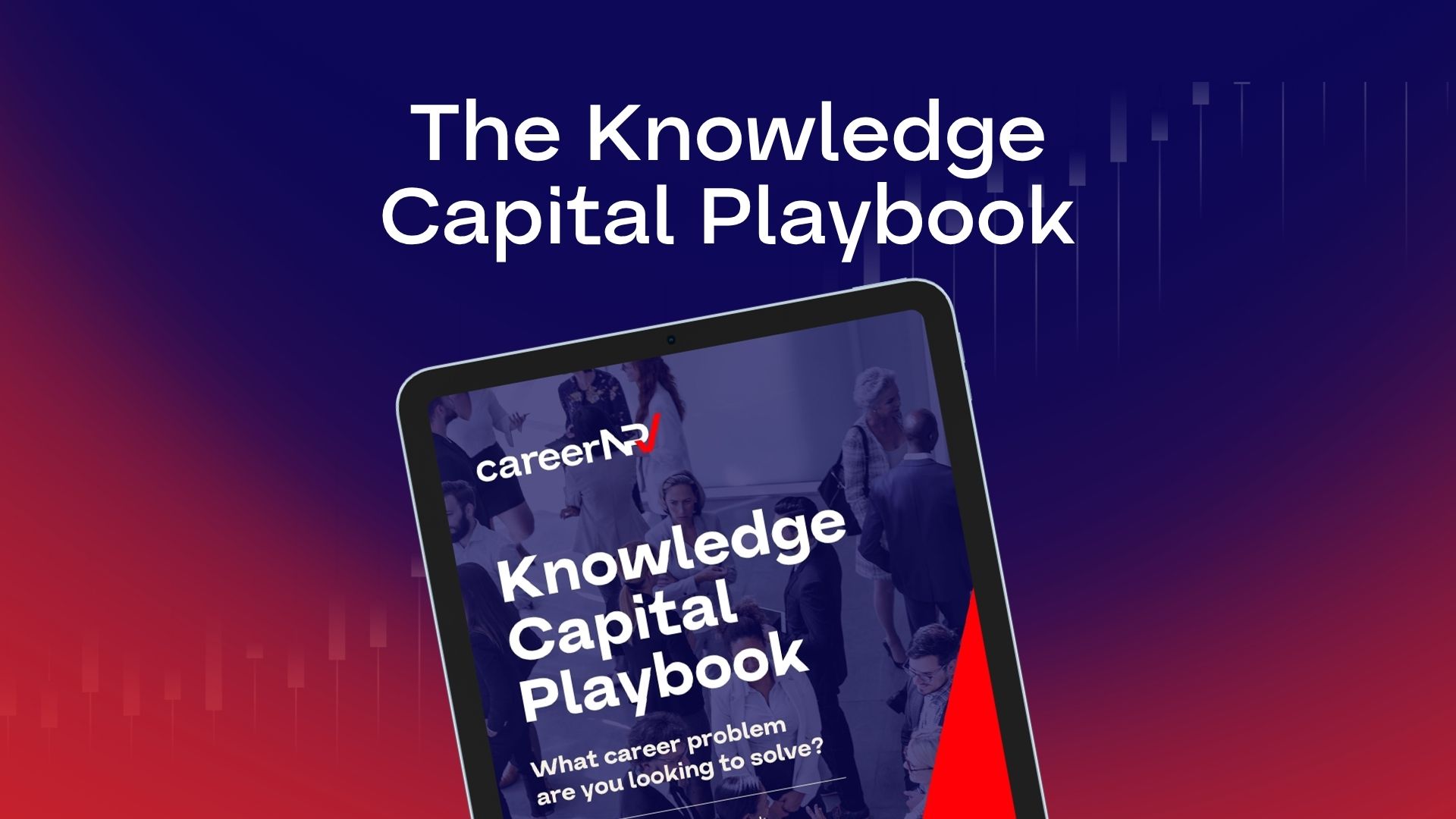
‘The Knowledge Capital Playbook’
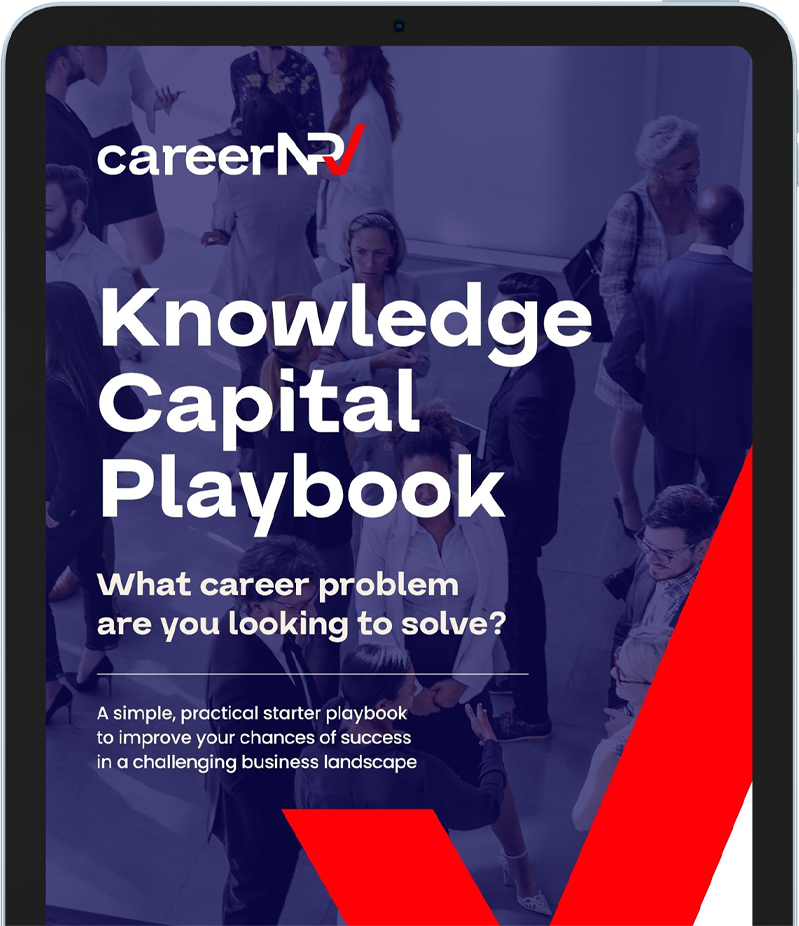
is a practical starting point for professionals looking to activate their networks and get access to practical, forward-thinking guidance.
Sign up to careerNPV and get the complimentary Knowledge Capital Playbook
Sources
¹ Frontiers in Psychology — “Managing Knowledge in Organizations: A Nonaka’s SECI Model Operationalization.“
ASCN Higher Education — “SECI Model of Knowledge Creation.“
² Nature Human Behaviour — “The Effects of Remote Work on Collaboration Among Information Workers.“
³ Journal of Computer-Mediated Communication — “Information Sharing in a Hybrid Workplace.“
⁴ Bain & Company — “Streamlining Spans and Layers.“
McKinsey & Company — “Want to Break the Productivity Ceiling? Rethink the Way Work Gets Done.“